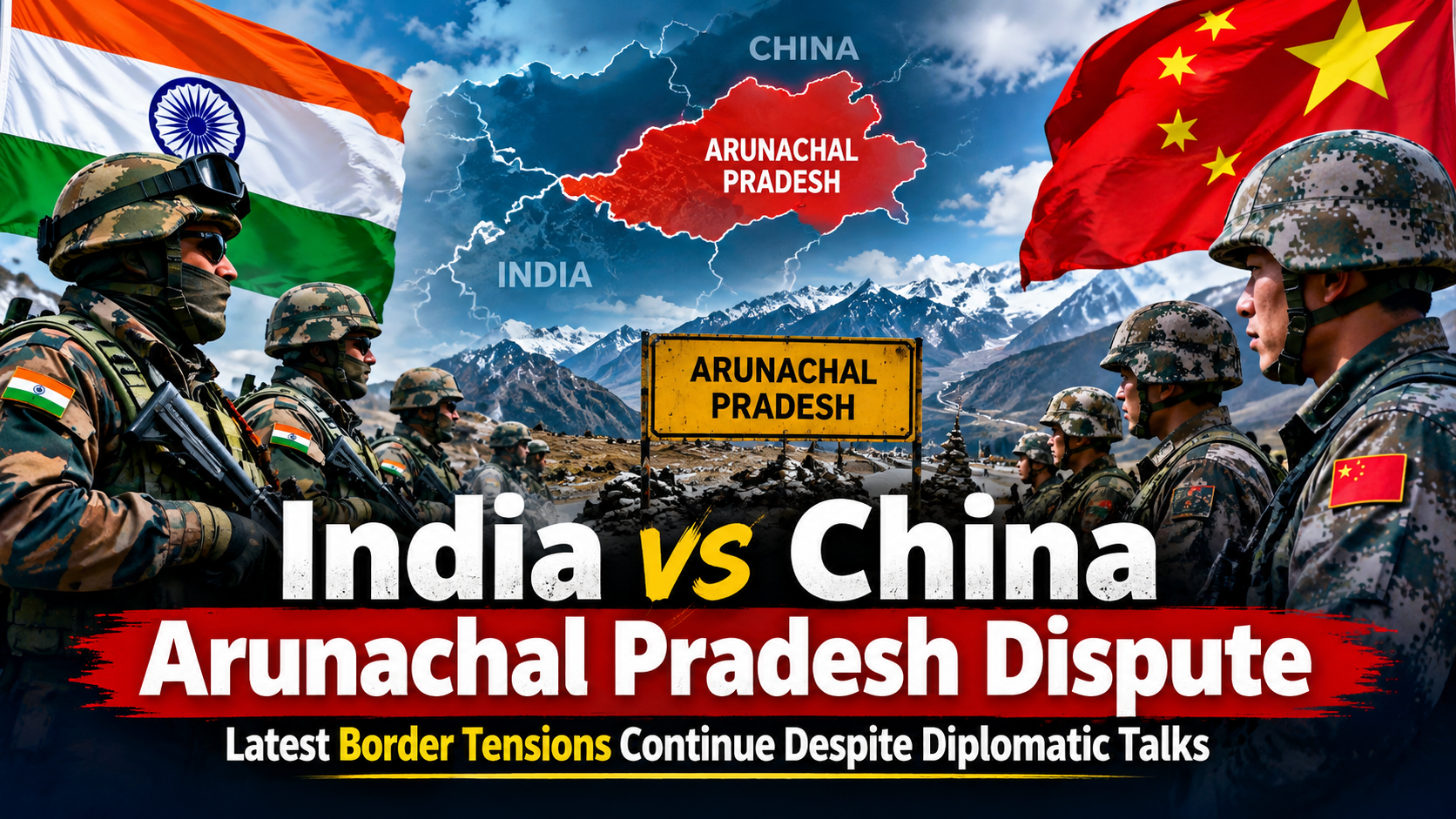
New Delhi, October 27, 2026: The India vs China Arunachal Pradesh Dispute has returned to the spotlight after India’s Indo-Tibetan Border Police (ITBP) chief confirmed that face-offs between Indian and Chinese forces were continuing at multiple locations along the Arunachal Pradesh frontier. The latest developments have raised questions about border security, military preparedness and the effectiveness of ongoing diplomatic negotiations between the two Asian neighbours.
According to reports published by The Indian Express and The Diplomat, the situation remains sensitive despite several rounds of military and diplomatic discussions aimed at preventing further escalation.
India vs China Arunachal Pradesh Dispute: What Is Happening at the Border?
On October 22, ITBP Director General Shatrujeet Kapur confirmed that face-offs had occurred at several locations in Arunachal Pradesh and that the situation was continuing. His remarks followed reports of tensions around Taksing and Asaphila in the Upper Subansiri district.
Earlier, India and China had held military-level discussions to address developments along the disputed Line of Actual Control (LAC). Indian troops reportedly remained deployed in significant numbers in the affected area to prevent the situation from escalating.
The ongoing tensions in Arunachal Pradesh underscore the fragility of the situation along the Line of Actual Control, despite recent diplomatic efforts. Both nations remain on high alert, with military presence maintained in key locations to deter any potential escalation. While incidents of confrontations have been reported, the absence of large-scale armed conflict suggests a continued emphasis on dialogue and negotiation. The international community is closely monitoring developments, hoping for a peaceful resolution to this longstanding dispute.
Why Is Arunachal Pradesh Important in the India vs China Arunachal Pradesh Dispute?
Arunachal Pradesh occupies a strategically important position in India’s northeastern region, sharing an international boundary with China. The state is also significant because of its mountainous terrain, border communities and proximity to sensitive military areas.
China refers to Arunachal Pradesh as “Zangnan,” or South Tibet, and claims parts of the territory. India firmly rejects these claims and maintains that Arunachal Pradesh is an integral and inalienable part of the country.
The dispute is rooted partly in disagreements over the McMahon Line, which India recognises as the basis of its eastern boundary while China rejects it.
The two countries also have different perceptions of the LAC in certain areas. These differences can bring opposing patrols into face-to-face situations, creating the possibility of misunderstandings and escalation.
India vs China Arunachal Pradesh Dispute: Fresh Controversy Over Place Names
The territorial disagreement has also extended to maps and geographical names.China has periodically announced Chinese names for locations in Arunachal Pradesh to reinforce its territorial claims. India rejects such exercises, maintaining that changing place names cannot alter the state’s legal or territorial status.
In August 2026, India announced the standardisation of names for 27 geographical features in Arunachal Pradesh on official Indian maps. The exercise was intended to improve the identification and public awareness of these locations.
The competing naming exercises illustrate how both countries continue to assert their positions over the disputed region through official statements, maps and administrative measures.
Diplomatic Talks Have Yet to Resolve Border Differences
Despite the continuing tensions, India and China have maintained diplomatic and military communication.On August 6, 2026, the two sides held the 36th meeting of the Working Mechanism for Consultation and Coordination on India-China Border Affairs in New Delhi.
On August 25, National Security Adviser Ajit Doval and Chinese Foreign Minister Wang Yi participated in the 25th round of Special Representatives’ talks on the boundary question in Beijing. Military commanders subsequently held discussions at the Wacha-Damai border meeting point on September 6.
India’s Ministry of External Affairs said on October 23 that disturbances occur when Chinese forces deviate from established patrolling patterns. It also emphasised that both countries continue to use diplomatic and military mechanisms to address outstanding issues and avoid misunderstandings.
These engagements demonstrate that dialogue remains an important part of managing the dispute, although a final boundary settlement remains elusive
What Lies Ahead for India-China Relations?
The latest developments in the India vs China Arunachal Pradesh Dispute underline the challenges facing both governments. Maintaining peace along the LAC is essential for border communities, regional stability and broader bilateral relations.
India continues to emphasise territorial integrity and border security, while China maintains its competing territorial claims. Both sides face the task of managing differences without allowing local confrontations to escalate into a wider crisis.
The coming months will be important in determining whether military communication, diplomatic engagement and established border-management mechanisms can reduce friction along the Arunachal Pradesh frontier.
For now, the dispute remains unresolved, and developments on the ground will continue to shape the future of India-China relations.