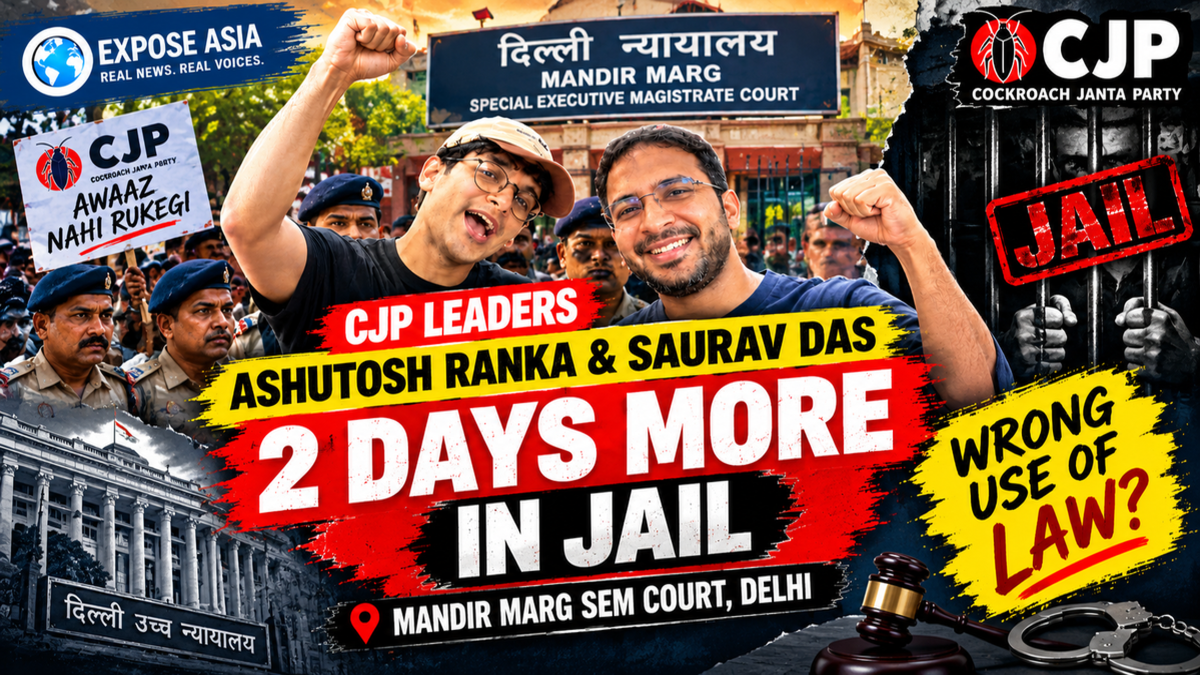
CJP Leaders Saurav Das and Ashutosh Ranka Sent to Jail for Two More Days by Delhi SEM CourtNew Delhi, October 20, 2026: Cockroach Janata Party (CJP) leaders Saurav Das and Ashutosh Ranka will remain in judicial custody for two more days after a Special Executive Magistrate (SEM) at Mandir Marg Police Station in Delhi extended their custody on October 19. The decision came in connection with the case arising from their entry into the restricted Jantar Mantar protest area during demonstrations over electoral roll revisions.
CJP leaders Saurav Das and Ashutosh Ranka’s Judicial Custody Extended by Two Days
The latest development means that Saurav Das and Ashutosh Ranka will continue to remain in Tihar Jail while the case proceeds. The two leaders were initially sent to five days of judicial custody on October 14 following their detention by Delhi Police.According to media reports, both leaders were produced before a newly appointed Special Executive Magistrate at Mandir Marg Police Station on Monday, October 19.
The magistrate extended their judicial custody by another two days, and they are expected to be produced before the magistrate again on October 21.The case has drawn attention because of the circumstances surrounding the arrests, the legal arguments presented by both sides, and the wider political debate over the right to protest in the national capital.
Why Were Saurav Das and Ashutosh Ranka Arrested?
CJP leaders Saurav Das and Ashutosh Ranka, The arrests are connected to a protest at Jantar Mantar, where CJP members and supporters raised concerns about the Special Intensive Revision (SIR) of electoral rolls and demanded the resignation of Chief Election Commissioner Gyanesh Kumar.Delhi Police alleged that the two leaders entered the protest area without authorisation after climbing over a locked gate.
Jantar Mantar had recently been de-notified as an officially designated protest site, and authorities cited concerns about compliance with restrictions and the maintenance of public order.Police also argued that the CJP leaders Saurav Das and Ashutosh Ranka had breached undertakings relating to the maintenance of peace. The authorities expressed concern that their release could lead to further violations or disrupt public tranquillity.However, the allegations remain part of the ongoing legal proceedings. The decision to extend custody does not, by itself, establish criminal guilt.
Lawyers Raise Questions Over Custody and Bail Proceedings
CJP leaders Saurav Das and Ashutosh Rank The custody extension has also brought the role of legal safeguards and preventive proceedings into focus.According to reports, the CJP leaders’ legal team challenged the grounds for their continued detention and raised objections to the handling of bail and surety proceedings. Their lawyers reportedly argued that the reasons for restricting their liberty were insufficiently clear and questioned the rejection of sureties submitted on their behalf.
Reports also indicated that the magistrate directed the defence to submit alternative guarantors after the sureties presented during the proceedings were not accepted.The dispute has consequently developed beyond the original protest incident, with questions being raised about the application of preventive legal provisions, the assessment of potential public-order risks, and the opportunity available to the accused to secure release. of The CJP leaders Saurav Das and Ashutosh Ranka The precise legal position will depend on the relevant orders, the applicable statutory provisions, and the arguments considered by the competent authorities.
CJP Protest Over Electoral Roll Revision
The controversy is unfolding against the background of protests over electoral roll revisions and allegations of irregularities in the electoral process.
CJP leaders Saurav Das and Ashutosh Ranka has criticised aspects of the voter-list revision exercise and demanded accountability from the Election Commission. The party’s position reflects concerns raised by some political activists about voter deletions and the possible impact on eligible voters.
The Election Commission and the ruling establishment have disputed allegations of political bias in the electoral process. Authorities have maintained that electoral rolls are subject to revision and that eligible voters whose names are missing can seek their inclusion through the prescribed procedures.
These competing positions have made the issue a point of political contention, with demonstrations and public statements drawing attention to questions of electoral transparency and democratic participation.
What Happens Next?
The next reported production of CJP leaders Saurav Das and Ashutosh Ranka before the Special Executive Magistrate is scheduled for October 21, 2026. The proceedings may clarify the status of their custody, the acceptance of fresh sureties, and the next steps in the case.Meanwhile, the matter continues to raise broader questions about how authorities regulate demonstrations at restricted locations and how courts and magistrates assess preventive detention requests.
For CJP supporters, the custody extension is an important development in the party’s ongoing campaign over electoral issues. For the authorities, the case centres on compliance with restrictions and the prevention of possible public-order disturbances.The outcome will depend on further proceedings and the applicable legal framework. Until the matter is resolved, allegations against the two leaders should be distinguished from any final determination of legal responsibility.SEO Conclusion: The two-day custody extension of CJP leaders Saurav Das and Ashutosh Ranka has brought renewed attention to the Jantar Mantar protest, electoral roll revision, preventive custody, and the legal boundaries governing demonstrations in Delhi.