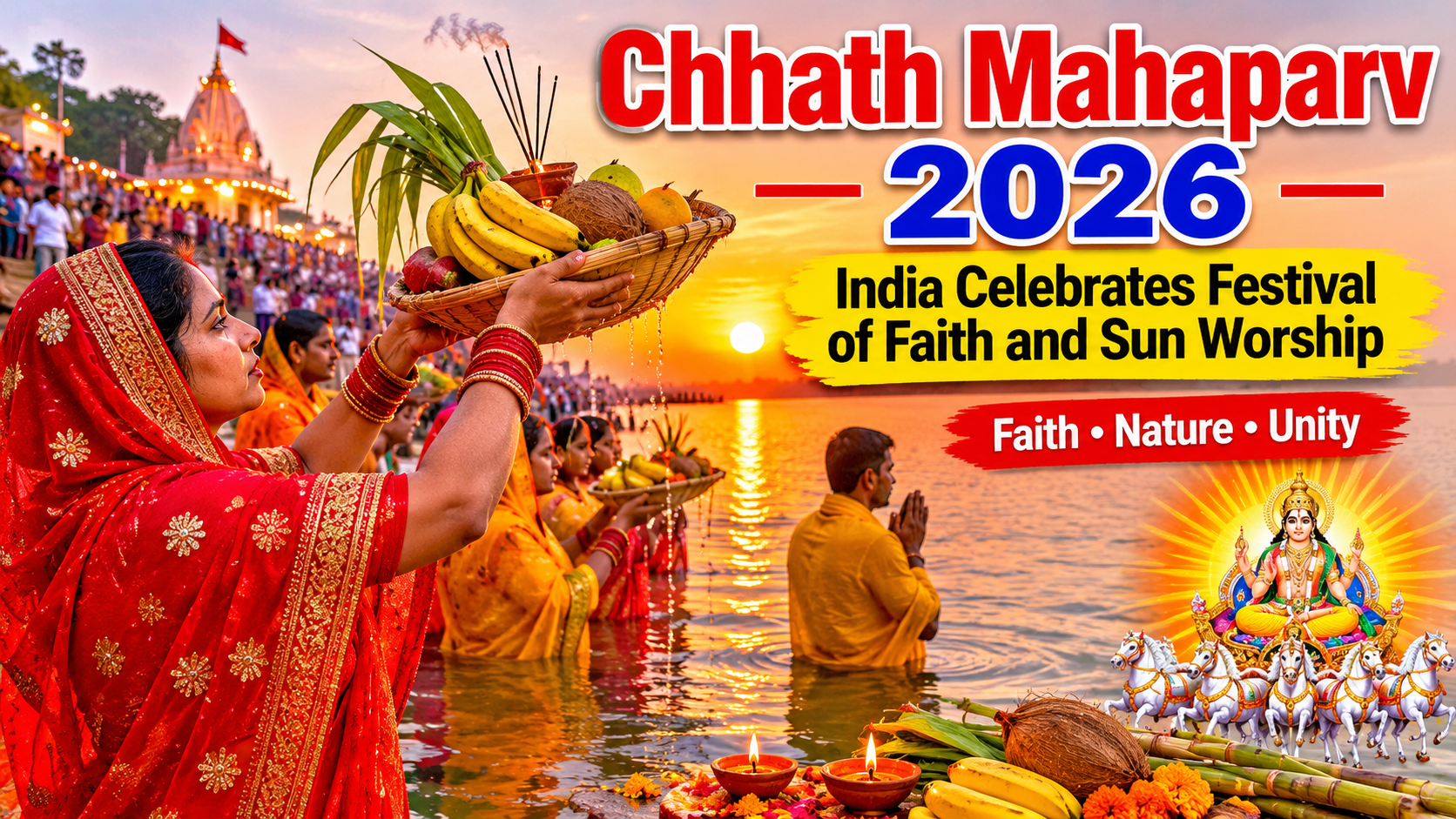
New Delhi, November 15, 2026: India is witnessing a wave of religious devotion as millions of people celebrate Chhath Mahaparv, one of the country’s most significant traditional festivals dedicated to the worship of the Sun God, Surya Dev, and Chhathi Maiya. The festival is particularly celebrated with great enthusiasm in Bihar, Jharkhand, Uttar Pradesh and parts of Delhi, while communities across other states and abroad also participate in the celebrations.
The four-day festival brings together families and communities through rituals, fasting, prayers and offerings to the setting and rising Sun. Devotees gather at rivers, ponds, lakes and specially prepared ghats to perform traditional ceremonies.
Chhath Mahaparv 2026: Four Days of Rituals and Devotion
The celebrations began on November 13 with Nahay Khay, during which devotees take a ritual bath and prepare traditional meals. The second day, November 14, was observed as Kharna, when devotees observe a day-long fast and break it after offering prayers in the evening.
November 15 marks the main day of the celebrations, known as Sandhya Arghya. Devotees stand in water and offer Arghya to the setting Sun, presenting fruits, sugarcane, thekua and other traditional offerings in bamboo baskets.
The festival will conclude on November 16 with Usha Arghya, when devotees offer prayers to the rising Sun before completing their fast. In New Delhi, sunset on November 15 is expected at approximately 5:28 PM, while sunrise on November 16 is expected at around 6:44 AM.
Chhath Mahaparv Reflects India’s Cultural and Spiritual Heritage
The festival holds deep cultural and spiritual importance, particularly among communities originating from Bihar and eastern Uttar Pradesh. Over the years, migration and urbanisation have helped spread its traditions to metropolitan cities, including Delhi, Mumbai and Kolkata.
Unlike many other religious celebrations, Chhath is widely recognised for its emphasis on simplicity, discipline, cleanliness and devotion. Devotees traditionally avoid certain foods, maintain strict hygiene and prepare offerings without using conventional forms of elaborate decoration.
The Sun is worshipped as the source of energy and life, while the rituals express gratitude towards nature and the environment.
Ghats Witness Crowds as Authorities Make Arrangements
Across several cities, devotees are visiting designated ghats and water bodies to participate in the celebrations. Local administrations generally arrange lighting, sanitation, drinking water, security personnel, medical assistance and crowd-management facilities to support the large gatherings.
In Delhi, Chhath celebrations hold particular significance because of the large population of people from Bihar, Jharkhand and eastern Uttar Pradesh. Various residential colonies and community organisations organise temporary ghats and cultural programmes.
Authorities and organisers are also expected to appeal to visitors to maintain cleanliness, avoid overcrowding and follow safety instructions near water bodies.
Chhath Mahaparv Promotes Unity, Nature and Community Participation
Beyond religious observance, the festival represents social harmony and collective participation. Families come together to prepare traditional food, arrange offerings and support those observing the difficult fast.
The celebrations also highlight the importance of water bodies, environmental cleanliness and respect for natural resources. Community participation creates a shared sense of belonging among people from different backgrounds.
As India celebrates this traditional festival, the atmosphere at the ghats reflects faith, dedication and cultural continuity. For millions of devotees, the occasion is not merely a religious ceremony but an expression of gratitude, hope, discipline and family well-being.
The festival will reach its conclusion with prayers to the rising Sun on Monday morning, November 16, as devotees complete their rituals and break their fast.