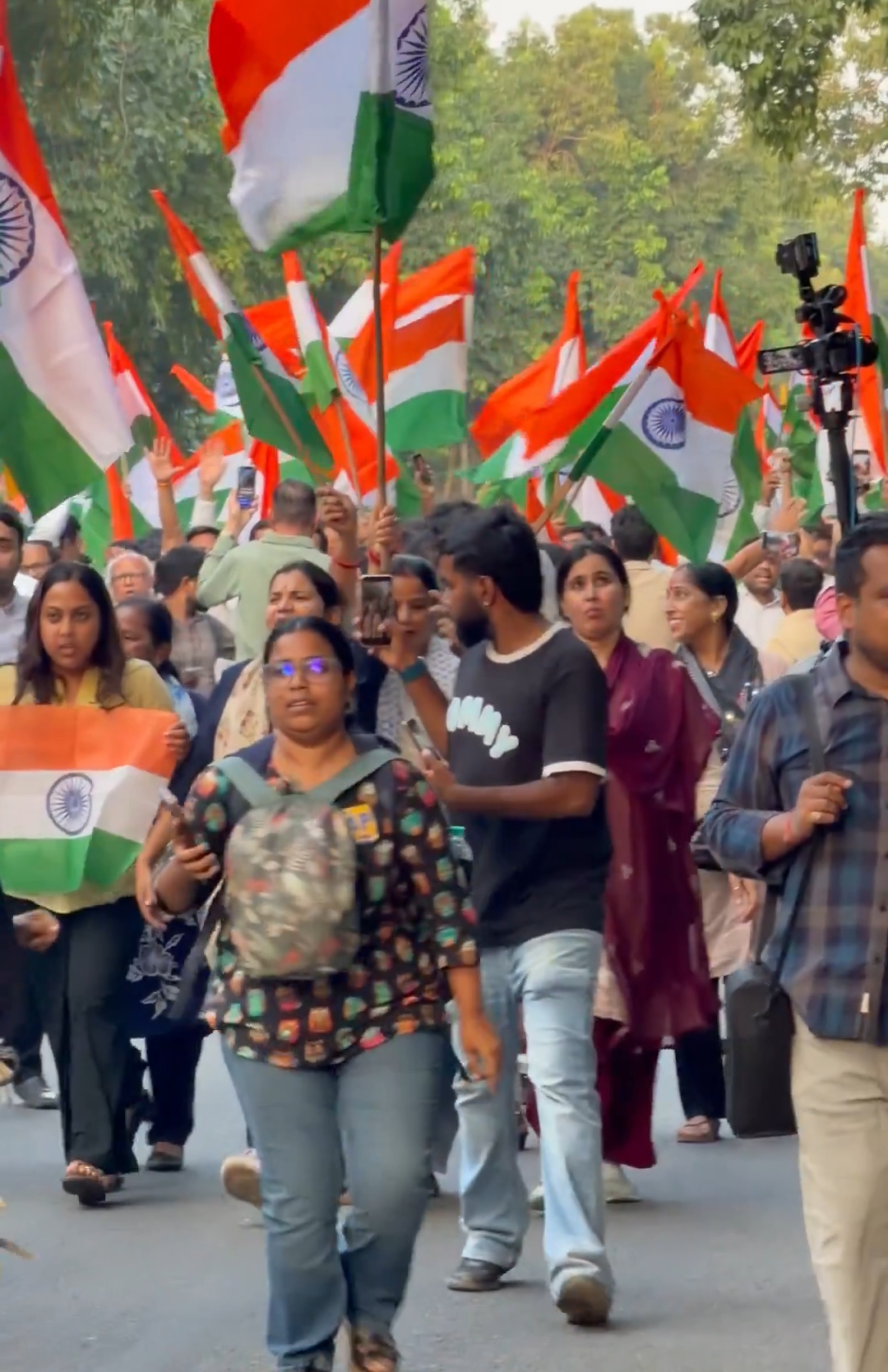
Executive Summary & OverviewOn October 16, 2026, the heart of the national capital turned into a fortress of security personnel, barricades, and political drama. What began as a high-octane public call by Cockroach Janta Party (CJP) activist Abhijeet Dipke to assemble at Central Park, Connaught Place, and wave the Indian National Flag—the Tiranga—devolved into widespread preventative detentions, severe traffic gridlock, and an intense debate over democratic freedom versus public order.
Dipke’s campaign, titled “Lehra Do Tiranga,” urged citizens to gather en masse at 5:00 PM on October 16 to assert their patriotic right to hold the national flag. However, local authorities and law enforcement viewed the unpermitted gathering as a threat to urban mobility, public safety, and local commerce. By evening, over 150 demonstrators, including Dipke and key associate Neha Bora, were taken into preventive custody, turning the iconic heart of Delhi into a battleground of political optics and civil liberty discourse.
The Origin of the Call: A Symbol Turned Political Flashpoint
The catalyst for the October 16 protest stems from a series of escalated legal actions between student groups, CJP activists, and Delhi authorities earlier in the month. Following the arrests of fellow activists Saurav Das and Ashutosh Ranka—who were remanded to judicial custody for staging demonstrations at Jantar Mantar—Dipke made a passionate public appeal.
”I urge all patriots to come to Central Park, CP, at 5 pm on Oct 16 with the tricolour. We will show that waving the Tiranga is not a crime,” Dipke announced in a video message that circulated widely across social media platforms.
Dipke framed the exercise as a peaceful assertion of national pride and fundamental rights, arguing that citizens should be allowed to display the National Tricolour anywhere without fear of state reprisal or administrative harassment. The viral call quickly gathered support among student unions, civil rights groups, and opposition political factions.
Positive Perspective: Reclaiming Public Space with National Pride
For supporters and civil rights advocates, the Lehra Do Tiranga movement represented a courageous civic movement against state overreach.
Key Arguments from Proponents:Constitutional Rights and Free Expression: Demonstrators argued that holding the Indian Tricolour in a prominent public space like Central Park is a constitutionally protected rights exercise under Article 19(1)(a) of the Indian Constitution.
Symbolic Resistance: Protesters insisted that the Tricolour belongs to the public, not just state authorities. Using the national flag served as a unifying and non-violent symbol of democratic accountability.
Mass Engagement: Despite intense police presence, hundreds of young citizens, students, and activist groups gathered along the Inner Circle and Mandi House carrying flags, signaling a deep engagement with civic issues among the youth.
Before his detention, Dipke posted a video stating: “I am alone. How is stepping outside with the National Flag a violation of law?” This line echoed strongly across social media, where supporters characterized the police crackdown as an overbearing response to a peaceful gathering.
Negative Perspective: Civic Disruption, Commerce Impact, and Safety ConcernsConversely, local business associations, daily commuters, and law enforcement viewed the call as a reckless ploy that endangered public safety and disrupted urban life.
Key Concerns Raised by Critics and Authorities:Unpermitted Location: Connaught Place and Central Park are prime commercial and transit hubs, not designated protest venues like Ramlila Maidan. Authorities emphasized that unannounced mass gatherings risk chaos.Impact on Local Businesses: Traders in Connaught Place, Palika Bazaar, and surrounding market complexes expressed deep frustration over sudden park closures and footfall drops on a busy weekday.Severe Traffic Gridlock: Security diversions around Mandi House, Parliament Street, and Connaught Place led to massive traffic congestion during peak evening commute hours. Security and Preventive Orders: Law enforcement cited Section 163 of the Bharatiya Nagarik Suraksha Sanhita (BNSS), maintaining that unchecked crowds in tightly packed heritage corridors create significant crowd-control hazards.
Chronology of Events: October 16 Timeline
09:00 AM — Delhi Police serve formal notice at Dipke’s residence citing Section 163 BNSS.02:00 PM — NDMC announces complete closure of Central Park for October 16–17.04:00 PM — Security deployment exceeds 6,000 personnel; CCTV and drones activated.04:45 PM — Abhijeet Dipke and Neha Bora taken into preventive custody while leaving for CP.05:00 PM — Protesters assemble near Inner Circle & Mandi House waving Tricolour.06:30 PM — Over 150 demonstrators detained; severe traffic delays reported across Central Delhi.
Security Deployment and Public Impact Delhi Police enforced a massive security grid across New Delhi to prevent unsanctioned assemblies. Over 6,000 personnel from the Delhi Police and paramilitary forces were stationed at entry points around Rajiv Chowk Metro Station, Palika Bazaar, and the Inner Circle.Park Lockdown: Central Park was locked down by the New Delhi Municipal Council (NDMC), rendering the primary meeting spot inaccessible. Surveillance Grid: Over 10 specialized CCTV units were installed around the park perimeter, accompanied by overhead drone surveillance to track crowd movements. Transit Diversions: Outer Circle traffic was diverted, causing bottlenecking along Barakhamba Road, Janpath, and Ashoka Road during peak evening hours.
Political and Legal FalloutThe confrontation in Connaught Place quickly evolved into a larger political controversy. Opposition parties slammed the preventive detentions, characterizing the security response as an unnecessary heavy-handed approach to a flag-waving appeal.
Meanwhile, administrative officials maintained that maintaining public order and protecting normal business operations in key commercial zones remain top administrative priorities. Legal experts point out that while citizens hold the right to assemble peacefully, reasonable restrictions regarding public order, venue selection, and traffic safety are routinely upheld by courts.
ConclusionAbhijeet Dipke’s October 16 Tiranga Call highlights the ongoing tension between citizen protest and public order in urban India. While the event demonstrated the emotive power of the national flag as a symbol of public assembly, it also underscored the administrative challenges of managing large gatherings in essential commercial spaces. As Delhi recovers from the traffic and turmoil of the demonstration, the event leaves behind crucial questions regarding where, how, and when citizens can exercise their rights without impacting everyday public life.